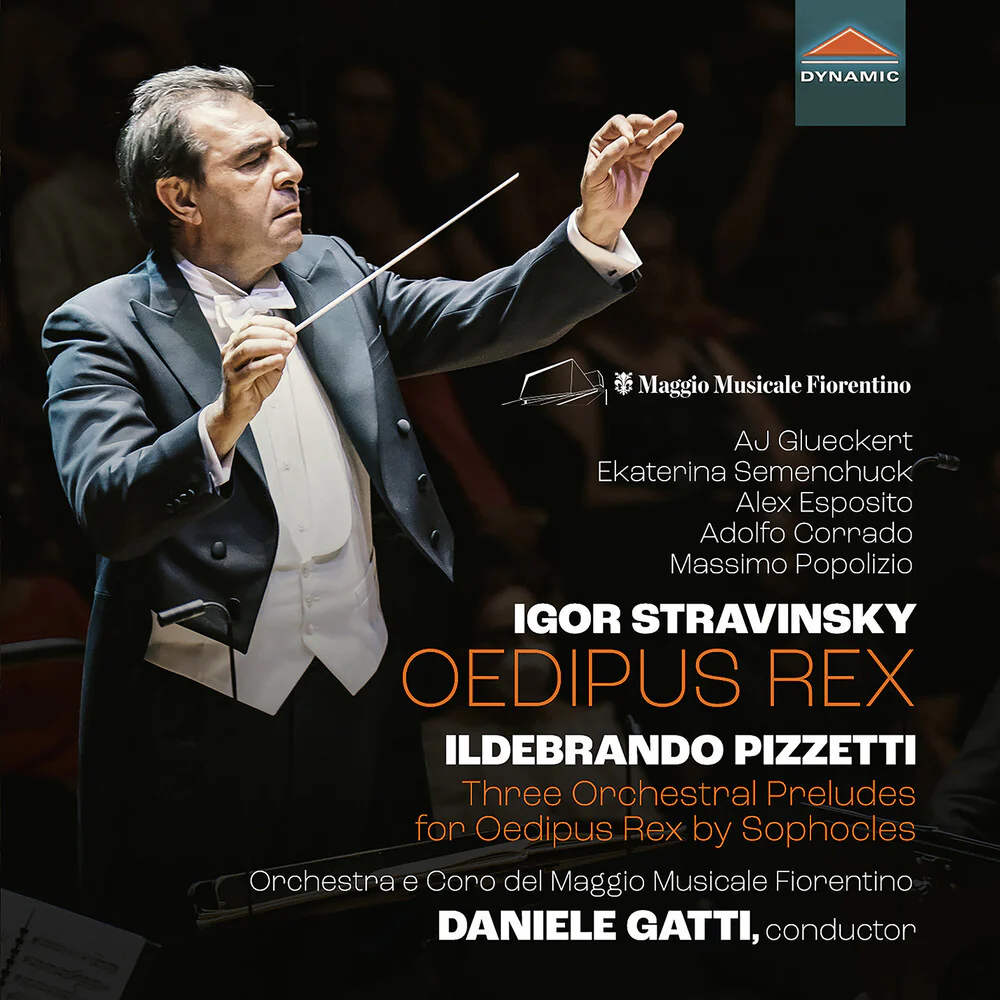
Pizzetti / Stravinsky / Glueckert- Three Orchestral Preludes For Oedipus Rex By (CD)
Both Pizzetti and Stravinsky were drawn to the subject of Oedipus Rex, but in very different contexts. The 24-year-old Pizzetti was commissioned to write Three Orchestral Preludes for use in a theatrical production. He wrote with an austere sense of orchestral colour, devoid of impressionism that favours the vaguely archaic, with modal inflections. Stravinsky's opera-oratorio was written in his neo-Classical style, with a central role for narrator. In a stark, stylised and formal setting, the use of Latin, and Stravinsky's instruction for the leading characters to wear masks, add timeless, impersonal elements to a work that culminates in catharsis
Original: $18.99
-65%$18.99
$6.65Pizzetti / Stravinsky / Glueckert- Three Orchestral Preludes For Oedipus Rex By (CD)
Both Pizzetti and Stravinsky were drawn to the subject of Oedipus Rex, but in very different contexts. The 24-year-old Pizzetti was commissioned to write Three Orchestral Preludes for use in a theatrical production. He wrote with an austere sense of orchestral colour, devoid of impressionism that favours the vaguely archaic, with modal inflections. Stravinsky's opera-oratorio was written in his neo-Classical style, with a central role for narrator. In a stark, stylised and formal setting, the use of Latin, and Stravinsky's instruction for the leading characters to wear masks, add timeless, impersonal elements to a work that culminates in catharsis
Product Information
Product Information
Shipping & Returns
Shipping & Returns
Description
Both Pizzetti and Stravinsky were drawn to the subject of Oedipus Rex, but in very different contexts. The 24-year-old Pizzetti was commissioned to write Three Orchestral Preludes for use in a theatrical production. He wrote with an austere sense of orchestral colour, devoid of impressionism that favours the vaguely archaic, with modal inflections. Stravinsky's opera-oratorio was written in his neo-Classical style, with a central role for narrator. In a stark, stylised and formal setting, the use of Latin, and Stravinsky's instruction for the leading characters to wear masks, add timeless, impersonal elements to a work that culminates in catharsis